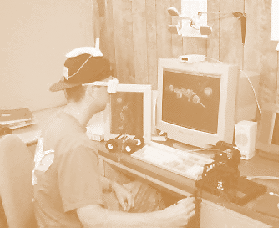
This is the final paper which I had to write to earn my Bachelor's degree in Electrical Engineering. The report described the work I did towards improving the performance of a virtual reality system.
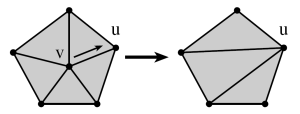
Abstract: In computer graphics systems, the need frequently arises to render three dimensional polygonal models with limitations on the amount of available computational power. This problem is particularly significant in virtual reality systems, where the requirement of having an acceptable frame rate places an upper limit on the amount of time that can be dedicated to the processing and rendering of each frame. This paper describes an implementation of a polygonal simplification algorithm that could be used to enhance the performance of such systems. The work was motivated primarily by the needs of the SHARC system currently under development at Colorado State University and aims to provide fast, incremental, simplification of polygonal models.
This is the thesis I wrote to earn my Masters degree in Computer Science. It described some research I did related to face recognition with computers.
Abstract: This thesis documents work that was performed using the Bayesian Interpersonal/Extrapersonal Classifier (BIC). We examine the implementation of the algorithm and address several numerical stability issues that were identified with the original design of the classifier. We also examine the performance of the algorithm on standard FERET data sets and explore a hybrid classifier which combines features of the BIC with a standard nearest-neighbor classifier.
This is a paper I co-authored with my adviser during graduate school. This work was preliminary to what eventually became my master's thesis.
Abstract: Prior work on face recognition has focused on the use of dimensionality reducing transformations, such as PCA or LDA, to reduce the complexity of the incoming data. These algorithms perform matching in a compressed space, typically choosing the nearest neighbor as the match. We propose that while such transformations are useful for choosing a set of candidates for matching, the selection among the candidates is best performed in uncompressed image space. This paper describes a biologically inspired technique that augments reduced dimension matching with post processing in the original uncompressed space. Our system, which uses a simple perceptron for the post processing stage, shows an improvement over standard techniques.
I wrote this paper for a Physical Geology class I took at Front Range Community College, when I was taking the extra class I needed in order to obtain K-12 teaching credentials in science.
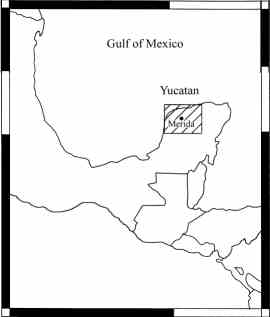
Abstract: This paper surveys research on the geology of the Yucatán peninsula and presents a historical view of the region from the Cretaceous to the present. Following a discussion of the peninsula's general geography and geology, we trace the effects of the K-T asteroid impact to the modern hydrology of the region and the resulting consequences on the potable water supply of Merida, the region's most populated urban center.